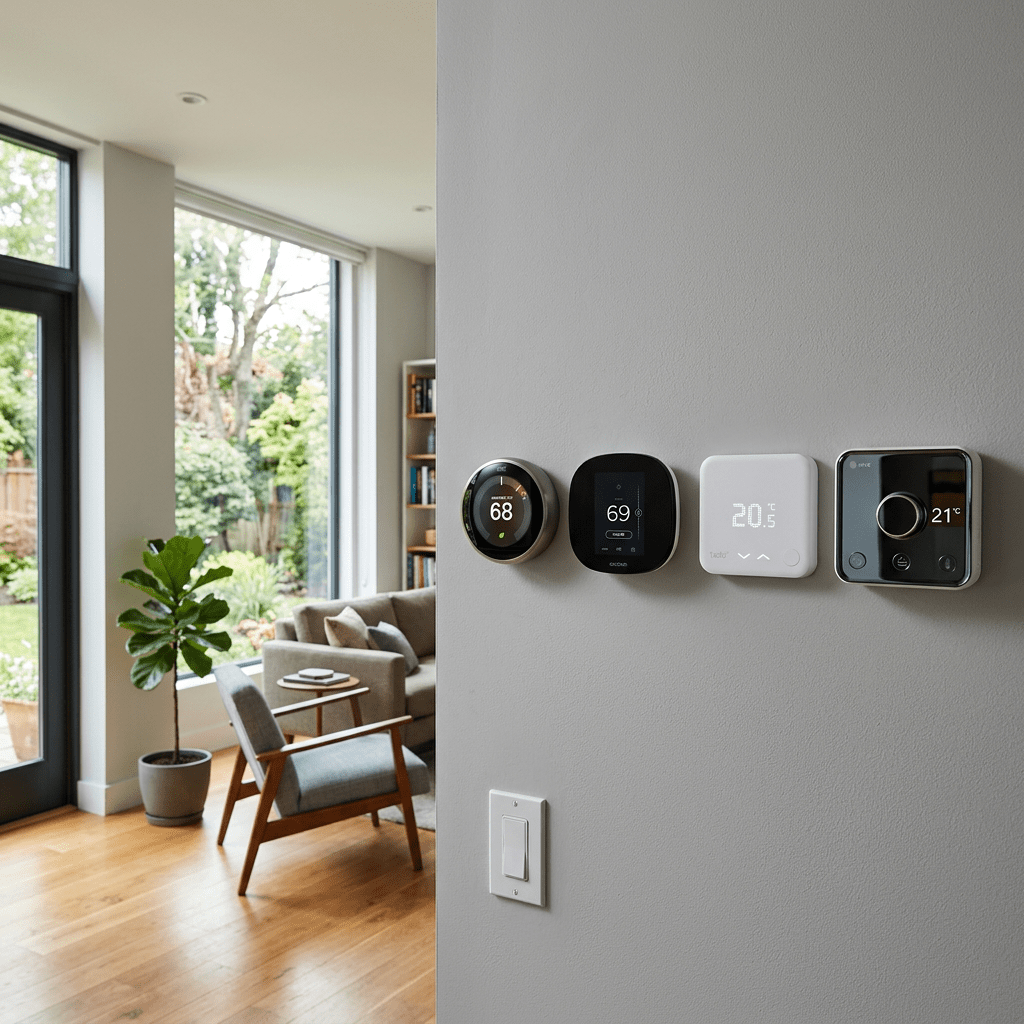
✅ Quick answer: In most cases, replacing an existing thermostat with a smart thermostat using the same wiring does not require a permit. However, if the installation involves adding new wiring or modifying the HVAC system, some jurisdictions may require one.
In most homes, replacing an existing thermostat with a smart thermostat does not require a building permit. However, if the installation involves adding new wiring or modifying the HVAC system, some jurisdictions may require one.
In the United States, almost any home improvement that touches a home’s structure, electrical system, or HVAC system can be subject to a building permit. The general rule — though it varies by county and city — is that building departments distinguish between maintenance or “like-for-like” replacement and alterations or new installations.
What does “like-for-like” mean?
When a component is replaced in the same location, with the same type of wiring, and without increasing the system’s capacity, most jurisdictions treat it as maintenance and don’t require a permit. When the project involves adding new wiring, modifying the HVAC system, or making other changes beyond a direct swap, a permit is more likely to be required, depending on the jurisdiction.
Do you need a permit to install a smart thermostat?
In most cases, no. Replacing an existing thermostat with a smart one that uses the same low-voltage wiring is generally treated as a routine replacement (“like-for-like”), not an electrical alteration. But since every state and county applies this differently, here are real examples, verified directly from official government sources:
- Washington (the state, not Washington D.C.) has the most direct answer: its state electrical code (WAC 296-46B-901) names thermostats specifically within its list of exempt like-for-like replacements.
- Massachusetts uses a broader category in its State Building Code (780 CMR) — “ordinary repairs” — which a thermostat swap typically falls under, though the code doesn’t name thermostats individually.
- Florida is the most interesting case, because there isn’t even consensus within the state itself:
- Broward County has an official interpretation (Formal Interpretation FI-6) stating that installation of wireless low-voltage systems and their components, “including, but not limited to, home-automation equipment, thermostats, and video cameras,” does not require a permit.
- Orange County (Orlando) publishes an official “low voltage” electrical permit application that lists “thermostats” explicitly as an example of work that must be specified on that application.
- Miami-Dade and Palm Beach County don’t mention thermostats at all in their official lists of exempt work.
It’s worth remembering that building codes and local interpretations change over time — what’s exempt in one county today could require a permit tomorrow, and vice versa. These examples reflect the information available at the time of publication; always confirm current requirements directly with your local building department before installing.
Smart thermostat
When you might need a permit
This is where many homeowners run into trouble: some jurisdictions may require an electrical permit in these cases, even though the work itself is minor.
- If your system doesn’t have a C-wire (common wire) and installation requires opening a wall to run new wiring.
- If the smart thermostat adds new heating or cooling stages, or zones that didn’t exist before.
- If a new transformer is installed or the existing low-voltage control circuit is modified.
The only way to know for certain is to confirm with your local building department, since rules change from city to city.
Do you need a permit? Quick summary
You generally do NOT need a permit if:
- It’s a direct replacement using the same existing wires.
- It’s an installation on a standard low-voltage system (24V).
- You’re using a power extender kit (like ecobee’s) without altering the circuit.
You might need one if:
- You need to run new wiring by opening walls.
- You’re adding new HVAC zones or stages that didn’t exist.
- You’re installing a new transformer or altering the control circuit.
Still unsure? → Check with your local building department, or search “electrical low voltage permit” + your city name.
How to check if your thermostat has a C-wire
Most manufacturers offer a compatibility-check tool before you buy. You can also check it yourself: turn off power to your HVAC system at the breaker panel, carefully remove your existing thermostat’s faceplate, and look for a wire connected to the terminal labeled “C.” If you don’t see that wire, or you’re not sure what you’re looking at, consult your HVAC system’s manual or a professional before continuing.
Some manufacturers also offer online compatibility tools where you can enter your HVAC system’s model to check whether you’ll need a C-wire or an adapter.
Smart thermostat
Popular smart thermostat models in 2026
If you’ve already confirmed your installation doesn’t require a permit (or that it qualifies as a “like-for-like” replacement), here are some of the easiest models to install yourself. The models below were selected for ease of installation and compatibility with most residential systems; some links may earn a commission at no extra cost to you.
- Amazon Smart Thermostat — ENERGY STAR certified, installs with step-by-step guidance in the Alexa app. May require a C-wire adapter. View on Amazon
- ecobee Smart Thermostat Premium — Compatible with 95% of residential HVAC systems. Includes a Power Extender Kit (PEK) for homes without a C-wire. View on Amazon
- Google Nest Thermostat — Designed to self-install in 30 minutes or less, according to Google. Many homes don’t need a C-wire, though it depends on the existing system. View on Amazon
- Honeywell Home T9 WiFi Smart Thermostat — Automatically identifies your home’s heating/cooling system type to simplify installation. ENERGY STAR certified. View on Amazon
As an Amazon Associate, I earn from qualifying purchases.
Although many people install a smart thermostat themselves, some manufacturers recommend professional installation to maintain certain warranty conditions or ensure the system functions correctly. It’s worth checking your model’s warranty policy before installing.
Smart thermostat
Frequently asked questions
Does a Google Nest need a permit?
Generally no, if it’s replacing an existing thermostat using the same wiring.
Does installing an ecobee require an electrician?
Not necessarily. Many homeowners install it themselves, though it depends on the complexity of the HVAC system and local requirements.
Do I need a permit if I’m just swapping the thermostat?
In most cases, no — as long as it’s a “like-for-like” replacement using the existing wiring. Confirm with your local building department if your situation is different.
Do I need a permit to change a thermostat in Florida?
It depends on the county. Broward County explicitly exempts it when it’s part of a wireless low-voltage system, while Orange County includes it under low-voltage electrical permits. Miami-Dade and Palm Beach County don’t mention it in their official lists. Always confirm with your local building department.
Before you install any upgrade
Although a smart thermostat rarely requires a permit, every locality has its own rules. If you’re planning a bigger renovation in Florida and want to understand the permitting process with more confidence, Ms. Rossiter’s book, How to Get a Construction Permit in Florida, offers a step-by-step framework — it’s specifically focused on Florida, so it’s most useful if your project is in that state.
⚠️ Disclaimer: This article is for informational and educational purposes only and does not constitute legal, professional, or technical advice. Information may not reflect recent changes in laws, codes, regulations, or local practices, and may vary by jurisdiction. We do not guarantee the content is complete, accurate, or up to date. Before starting any project, verify current requirements with your local building department and, if applicable, consult a qualified professional.
This content may include affiliate links. If you purchase through them, I may earn a commission at no extra cost to you. Thank you for supporting NextPermit.org’s free content! 🏠

